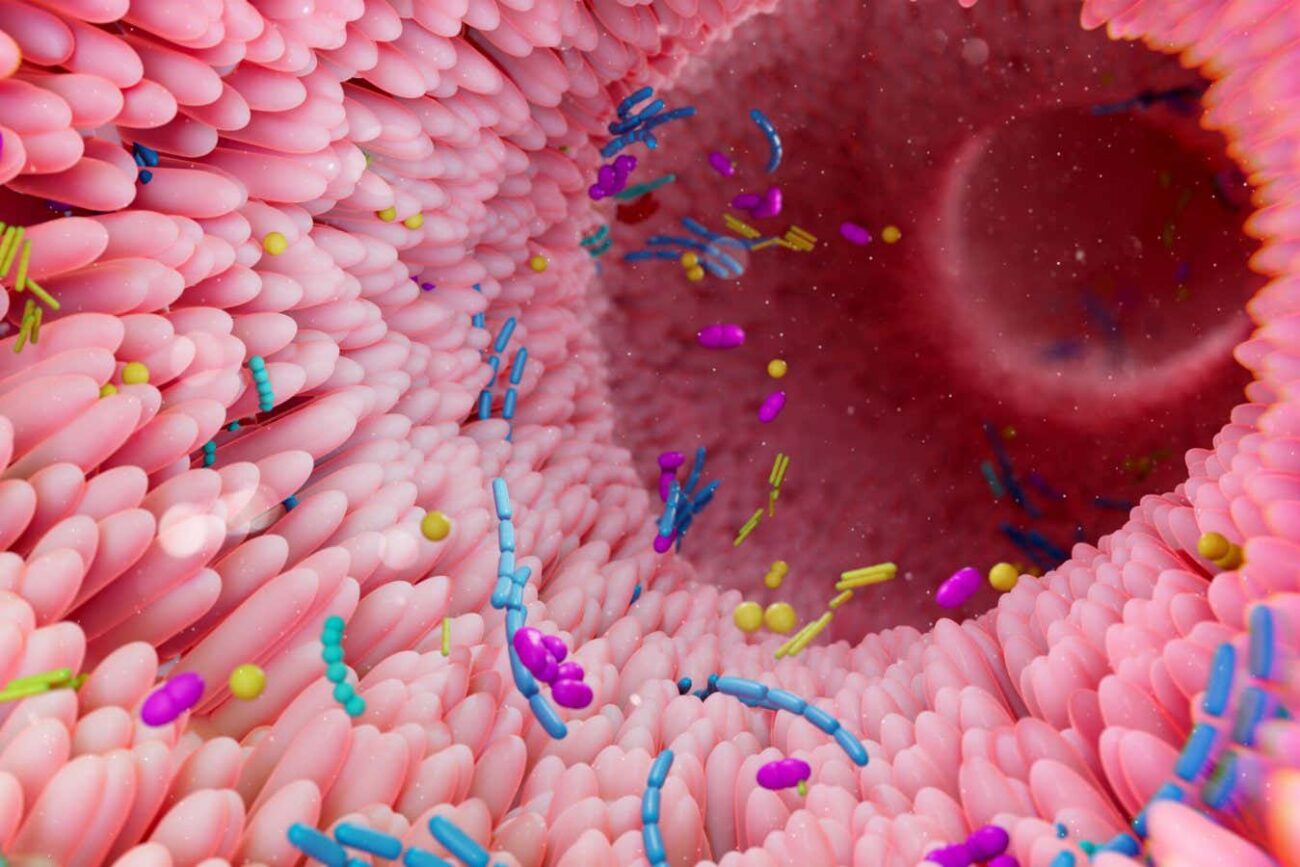
The gut microbiome is the community of microorganisms that live in the human digestive tract, especially in the large intestine. These organisms include bacteria, viruses, fungi, and other microbes, and together they help carry out functions that the human body cannot handle on its own. Researchers now understand that the gut microbiome plays an important role in digestion, vitamin production, immune activity, and the health of the intestinal lining.
Interest in the gut microbiome has grown quickly over the past two decades. Part of the reason is that improved sequencing technologies have made it easier to study microbial communities in detail. Another reason is that researchers have found links between the gut microbiome and a wide range of processes involving metabolism, inflammation, immune signalling, and even communication between the gut and other organs.
That does not mean the microbiome explains everything, or that every claim made about “gut health” is supported by strong evidence. This is a field where real scientific progress sits next to a large amount of hype. A useful introduction should make both points clear: the gut microbiome matters, but many details are still being worked out.
What does the term gut microbiome actually mean?
People often use the terms gut microbiome and gut microbiota as if they mean exactly the same thing, but there is a small difference. The gut microbiota refers to the microorganisms themselves, while the gut microbiome is often used more broadly to include the organisms, their genes, and their wider activity within the gut environment. In everyday writing, the two terms are often used interchangeably, but the broader meaning helps explain why this field is about more than just counting bacteria.
The human gut contains an enormous microbial population. The colon is especially densely populated, and this is where many of the most important microbial interactions take place. Different groups of microbes dominate in different regions of the digestive tract because the conditions vary from one area to another. The stomach, for example, is acidic and far less densely populated than the colon.
These microbes are not simply passive passengers. They interact with food components, with each other, and with cells in the gut lining. They also produce compounds that can affect the local gut environment and, in some cases, broader physiological processes elsewhere in the body.
What does the gut microbiome do?
The gut microbiome performs several useful functions that support normal human physiology. One of the best-established roles is helping to break down dietary fibres and other compounds that human digestive enzymes cannot fully process on their own. During that process, certain microbes produce short-chain fatty acids such as acetate, propionate, and butyrate, which are considered important for gut health and for the cells that line the colon.
The microbiome also contributes to vitamin-related processes and helps shape the intestinal environment. Some gut microbes are involved in the synthesis of vitamins such as vitamin K and certain B vitamins. Others help maintain the structure and function of the intestinal barrier, which matters because the gut lining is one of the body’s key interfaces with the outside world.
Another major role involves the immune system. The gut contains a large share of the body’s immune cells, and beneficial microbes help train immune responses so the body can better distinguish between helpful residents, harmless exposures, and harmful pathogens. This does not mean the microbiome “controls” immunity in a simple way, but it does mean that the relationship between microbes and immune regulation is fundamental rather than incidental.
Why is the gut so important to the immune system?
The digestive tract is constantly exposed to food, microbes, and foreign molecules, so the immune system must be active there without reacting in a damaging way to everything it encounters. This balancing act is one reason the gut is such an important site for immune regulation. Researchers describe the relationship as a form of continuous cross-talk between host tissues and microbial communities.
Beneficial microbes help by competing with harmful organisms for space and nutrients, which can reduce the opportunity for pathogens to take hold. They also produce metabolites and signalling molecules that affect the gut environment and influence how immune cells behave. Some of these interactions help support tolerance, while others are part of the system that prepares the body to respond to infections.
This is also why disruptions in the gut ecosystem attract so much scientific attention. If microbial composition, microbial activity, or barrier integrity changes in important ways, the effects may extend beyond digestion alone. Researchers are studying these patterns in connection with inflammatory bowel conditions, metabolic disorders, and other chronic diseases, although the strength and direction of those links can vary by condition.
How does diet affect the gut microbiome?
Diet is one of the most important influences on the gut microbiome. Microbes depend on what reaches the intestine, so long-term eating patterns can shape which groups of organisms thrive and which become less abundant. Fibre-rich diets, for example, provide substrates for fermentation, while heavily processed diets may alter the gut environment in different ways.
That said, the relationship is not simple enough to reduce to one “good” food and one “bad” food. Different fibres, fats, proteins, and plant compounds can affect microbial activity in different ways, and responses vary from person to person. Baseline microbiome composition, medication use, age, health status, and broader lifestyle factors all influence what happens.
This complexity is one reason researchers focus not only on which microbes are present, but also on what they are doing. A microbiome with a similar-looking composition can behave differently depending on diet, metabolism, and the compounds being produced in the gut. That functional layer is a major part of modern microbiome research.
What are short-chain fatty acids and why do they matter?
Short-chain fatty acids, often abbreviated as SCFAs, are among the best-known products of microbial fermentation in the gut. They are mainly produced when gut microbes break down dietary fibres and certain resistant carbohydrates that human enzymes do not fully digest in the small intestine.
These compounds matter because they are linked to several important gut functions. Butyrate, in particular, is often highlighted because colon cells use it as an energy source, and it appears to support the integrity of the intestinal lining. SCFAs are also associated with signalling effects that may influence inflammation, metabolism, and immune responses.
This does not mean that every conversation about fibre or fermented foods should be turned into a broad health promise. What it does mean is that SCFAs give researchers a concrete mechanistic pathway through which diet and microbial activity may affect host physiology. That is part of why they appear so often in microbiome science.
What is dysbiosis?
Dysbiosis is a term used to describe an imbalance or disruption in the microbial ecosystem. It is widely used in research, but it can be a slippery term because there is no single microbiome pattern that defines health for every person. A microbiome that looks normal for one individual may not look the same in another.
In practice, dysbiosis often refers to changes such as reduced microbial diversity, loss of beneficial functions, overgrowth of potentially harmful organisms, or altered production of important microbial metabolites. Researchers use the term when studying disease states, but the relationship is not always straightforward. In some cases, dysbiosis may contribute to disease processes; in others, it may partly reflect changes caused by disease, medication, or diet.
This distinction matters because it shows why microbiome science requires caution. A repeated association between microbial patterns and disease does not automatically prove that one caused the other. The strongest work in this area tries to move beyond correlation and identify mechanisms.
What kinds of health conditions are researchers studying?
The gut microbiome is being studied in relation to a wide range of health conditions. These include inflammatory bowel diseases, obesity, type 2 diabetes, fatty liver disease, colorectal cancer, and some aspects of neurological and psychiatric research. Scientists are also examining how the microbiome interacts with medications, immune pathways, and metabolic regulation.
Some of these research areas are more advanced than others. In gastrointestinal disease, for example, there is already substantial evidence that microbiome-related changes matter in clinically important ways. In other areas, especially where the microbiome is linked to the brain or to very broad claims about wellness, the science is often more preliminary and more easily overstated in public discussion.
A careful reader should pay attention to the type of evidence being discussed. Was the finding observed in mice, in cell cultures, in a small group of people, or in larger human studies? Was it an association, a short-term intervention, or a clinically meaningful outcome? These questions are essential for judging what a headline really means.
Does the gut microbiome affect the brain?
The idea of a gut-brain axis has attracted enormous attention, and for good reason. Researchers have found multiple pathways through which the gut and brain may communicate, including immune signalling, neural pathways, hormonal mechanisms, and microbial metabolites. This has led to interest in how the microbiome may relate to stress, mood, behaviour, and neurological development.
But this is also an area where public claims often outrun the evidence. It is reasonable to say that the gut and brain are biologically connected and that researchers are studying how microbiome-related signals may be involved. It is not reasonable to treat every early finding as proof that manipulating gut bacteria will solve mental health or neurological problems.
A good rule is to separate plausibility from proof. The mechanisms are plausible and scientifically important. The clinical implications are still being defined, and they should be discussed carefully.
Why is there so much hype around gut health?
The microbiome sits at the intersection of food, chronic disease, immunity, and personal wellbeing, so it is almost guaranteed to attract attention. It also offers a compelling narrative: trillions of invisible organisms living inside the body and potentially influencing major aspects of health. That idea is both scientifically rich and commercially attractive.
The problem is that commercial interest can move faster than evidence. Products, diets, tests, and supplements are sometimes marketed with claims that are far more confident than the science supports. Even when a general idea has merit, such as the value of fibre-rich diets or the importance of microbial diversity, that does not automatically validate every product attached to the trend.
For readers, the most useful response is not cynicism but discrimination. It makes sense to take the microbiome seriously. It also makes sense to ask whether a claim is based on established evidence, early mechanistic work, or marketing language dressed up as science.
What do researchers still not know?
Despite rapid progress, important questions remain unresolved. Researchers still do not have a single definition of a “healthy” microbiome that applies across individuals, ages, diets, and populations. They are also still working to understand which microbial changes are causal, which are compensatory, and which are simply markers of something else happening in the body.
There is also a major challenge in moving from association to intervention. It is one thing to show that certain microbial patterns are linked to better or worse outcomes. It is another to show that changing those patterns in a reliable way leads to meaningful clinical benefit. That is one reason why this field remains exciting but methodologically demanding.
In practice, the most useful scientific progress often comes from narrowing the question. Instead of asking whether the microbiome matters in general, researchers now ask which microbes, which metabolites, which pathways, and which patient groups matter under which conditions. That is a much harder question, but it is the one that produces better science.
How should readers think about the gut microbiome today?
The best way to think about the gut microbiome is as an important and active part of human biology, not as a miracle explanation for every health problem. It contributes to digestion, interacts with the immune system, helps shape the gut environment, and may influence broader physiological processes through several molecular pathways.
At the same time, microbiome science is still developing. Some findings are robust and widely accepted, especially around fibre fermentation, short-chain fatty acids, barrier function, and host-microbe interaction. Other areas remain more exploratory and should be treated with appropriate caution.
That combination is what makes the field so interesting. The gut microbiome is not a fad, but it is also not a license for oversimplified health claims. The real value lies in understanding the mechanisms carefully, following the evidence closely, and resisting the temptation to turn every new finding into a promise.
This article is for informational purposes only and does not constitute medical advice.
