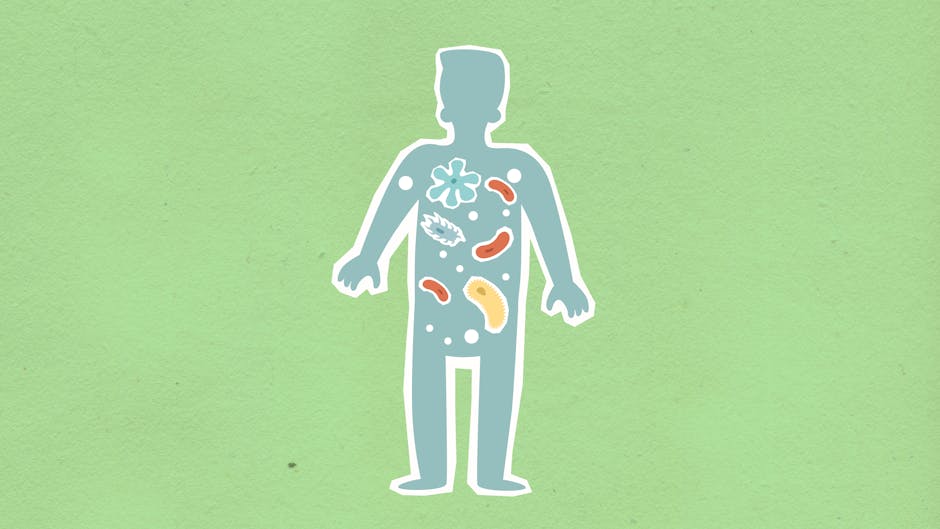
Why you need a critical reading approach
Microbiome research has moved from niche laboratories to mainstream news headlines. Articles claim that a single probiotic can cure anxiety, that gut bacteria predict obesity, or that a specific diet will “rebalance” your microbiome overnight. The excitement is understandable—our gut microbes influence digestion, immunity, and even brain chemistry. But the field is still evolving, and study designs vary widely. Without a systematic way to evaluate a paper, readers can easily be swayed by overstated conclusions, selective reporting, or statistical quirks.
The goal of this guide is to give you a practical checklist. By the time you finish, you will know which parts of a microbiome paper deserve trust, which require caution, and how to separate solid evidence from hype.
Basic terminology you should know
Before diving into methods, familiarize yourself with the most common terms. A clear grasp of language prevents misunderstanding later on.
- Microbiome – the collective genomes of all microorganisms (bacteria, viruses, fungi, archaea) in a defined environment, such as the gut or skin.
- Microbiota – the actual living microorganisms present, not their genetic material.
- Alpha diversity – a measure of species richness and evenness within a single sample.
- Beta diversity – a comparison of microbial composition between samples or groups.
- 16S rRNA sequencing – a method that amplifies a conserved bacterial gene to identify taxa; provides genus‑level resolution in most cases.
- Shotgun metagenomics – sequencing of all DNA in a sample; can reveal species‑level taxonomy and functional genes.
- Operational Taxonomic Unit (OTU) – a cluster of similar sequence reads, often used as a proxy for a species when 16S data lack finer resolution.
- Relative abundance – the proportion of a given taxon compared to the total microbial community; does not indicate absolute numbers.
- Confounder – any variable that influences both the exposure (e.g., diet) and the outcome (e.g., disease) and can distort the observed association.
Step 1: Identify the study design
Study design determines what conclusions are justified. Look for these key descriptors in the abstract and methods section.
Cross‑sectional vs. longitudinal
- Cross‑sectional – samples are collected at a single time point. The study can reveal associations but cannot establish cause and effect.
- Longitudinal – the same participants are followed over weeks, months, or years. This design provides stronger evidence for temporal relationships.
Intervention vs. observational
- Intervention (clinical trial) – participants receive a defined treatment (e.g., a probiotic). Randomized controlled trials (RCTs) are the gold standard because randomization minimizes confounding.
- Observational – researchers record exposures (diet, medication) without assigning treatment. Cohort or case‑control studies fall here. Results are more vulnerable to hidden confounders.
Sample size and power
Microbiome data are high‑dimensional; detecting true differences often requires large cohorts. A study that cites a power calculation or includes at least several dozen participants per group is more reliable than one with fewer than ten.
Step 2: Examine the participant characteristics
Human microbiome composition is shaped by age, sex, geography, diet, medication use, and even childbirth method. A well‑reported study will provide a table of baseline characteristics for each group.
- Check whether groups are matched for key variables (age, BMI, antibiotic exposure).
- Notice any exclusion criteria—participants who have taken antibiotics in the past month are often removed because antibiotics dramatically alter the gut flora.
- Look for details about diet, smoking, and health status; these are common confounders.
If the paper glosses over these factors, the findings may reflect underlying differences rather than the exposure under study.
Step 3: Scrutinize the laboratory methods
The reliability of results depends heavily on how the samples were collected, stored, and processed.
Sample collection and storage
- Were samples collected using a standardized kit? Differences in collection tubes can bias bacterial DNA yield.
- Was the time between collection and freezing minimized? Prolonged storage at room temperature can allow certain microbes to proliferate, skewing results.
DNA extraction protocol
Extraction kits vary in how efficiently they lyse Gram‑positive bacteria versus Gram‑negative. A study that uses a validated, widely adopted kit (e.g., MoBio PowerSoil) and reports a bead‑beating step is more trustworthy.
Sequencing approach
- 16S rRNA – adequate for broad community profiling but limited in species resolution and functional inference.
- Shotgun metagenomics – provides deeper taxonomic detail and functional potential, but is costlier and demands more computational expertise.
- Check whether the authors deposited raw reads in a public repository (e.g., NCBI SRA). Open data allows independent verification.
Quality control and bioinformatics
Look for statements about read trimming, removal of chimeric sequences, and the reference database used (e.g., SILVA, Greengenes, GTDB). Consistent pipelines and transparent parameters reduce hidden bias.
Step 4: Understand the statistical analysis
Microbiome data are compositional—percentages add up to 100 %. This property violates assumptions of many standard statistical tests. Authors should use methods designed for compositional data.
Alpha and beta diversity testing
- Alpha diversity is often compared with non‑parametric tests (e.g., Wilcoxon rank‑sum) because the data are not normally distributed.
- Beta diversity is visualized with ordination plots (PCoA, NMDS) and statistically assessed with PERMANOVA. Verify that the authors report a p‑value and an effect size (e.g., R²).
Differential abundance
Tools such as DESeq2, ANCOM, and ALDEx2 account for compositionality and library size differences. Simple t‑tests on relative abundances are inappropriate and should raise a red flag.
Multiple‑testing correction
When testing dozens or hundreds of taxa, the chance of false positives rises sharply. Acceptable studies apply a correction method (Benjamini‑Hochberg false discovery rate is common) and report both raw and adjusted p‑values.
Effect size and confidence intervals
Statistical significance alone does not convey practical importance. Look for reported effect sizes (e.g., fold change, odds ratio) and 95 % confidence intervals. Small, statistically significant changes may have negligible biological impact.
Step 5: Evaluate the interpretation of results
Even a methodologically sound study can be misinterpreted if authors overstate conclusions.
- Check whether the discussion differentiates between “association” and “causation.” A cross‑sectional study that finds higher Prevotella in people who eat more fiber should not claim that fiber *causes* the increase.
- Look for acknowledgment of limitations: small sample size, lack of dietary control, or single‑time‑point sampling.
- Notice whether the authors compare their findings to existing literature. Consistency with prior work adds credibility; stark contradictions should be explained.
Step 6: Identify potential sources of bias
Bias can creep in at any stage. Below is a checklist you can run through while reading.
| Bias type | What to look for |
|---|---|
| Selection bias | Unequal recruitment criteria, non‑random sampling, or over‑representation of a demographic group. |
| Information bias | Inaccurate exposure measurement (e.g., self‑reported diet) or inconsistent sample handling. |
| Confounding | Absence of adjustment for known confounders such as antibiotics, age, or BMI. |
| Publication bias | Only positive results highlighted; negative or null findings omitted from the abstract. |
| Analytical bias | Use of inappropriate statistical tests, lack of multiple‑testing correction, or selective reporting of significant taxa. |
Step 7: Consider the broader context
Microbiome science is still defining standards. A single study rarely changes practice. Place the paper within the larger evidence base.
- Are there meta‑analyses or systematic reviews on the same topic? Those synthesize multiple studies and balance out individual quirks.
- Do reputable guidelines (e.g., from the American Gastroenterological Association) reference the findings?
- Has the study been replicated by independent groups? Replication adds robustness.
Step 8: Practical take‑aways for non‑scientists
Even if you are not a researcher, you can apply the checklist to news articles that summarize microbiome studies.
- Verify the original source. Look for a link to the peer‑reviewed paper rather than a press release.
- Check the sample size and whether the study was an RCT or observational.
- Ask whether the claim is about “association” or “cause.”
- Be skeptical of headlines that promise a single supplement will “cure” a condition.
- Remember that relative abundance changes do not equal clinical improvement.
Common misconceptions clarified
“More diversity is always better.”
Higher alpha diversity is often linked to health, but not universally. Certain disease states (e.g., some infections) can temporarily increase diversity, and overly diverse communities may contain pathogens.
“If a bacterium is “good,” I should take a probiotic containing it.”
Many beneficial microbes are strict anaerobes that cannot survive in a capsule or colonize the gut after oral ingestion. Efficacy depends on strain, dose, matrix, and host environment.
“My stool test tells me everything about my gut.”
Stool reflects the luminal microbiota, which differs from mucosal communities attached to the intestinal wall. A single test also provides a snapshot, not a dynamic picture.
Summary of the critical‑reading checklist
- Determine study design (cross‑sectional vs. longitudinal, intervention vs. observational).
- Assess participant matching and reporting of confounders.
- Review sample collection, DNA extraction, sequencing platform, and data availability.
- Check that statistical methods handle compositional data, include multiple‑testing correction, and report effect sizes.
- Ensure the authors distinguish correlation from causation and acknowledge limitations.
- Screen for selection, information, confounding, publication, and analytical biases.
- Place the study in the context of existing literature and replication status.
- Apply the same skepticism to media coverage and consumer products.
By following these steps, you can separate robust microbiome research from overhyped claims. The field will continue to grow, and a disciplined reading approach will let you stay informed without being misled.
