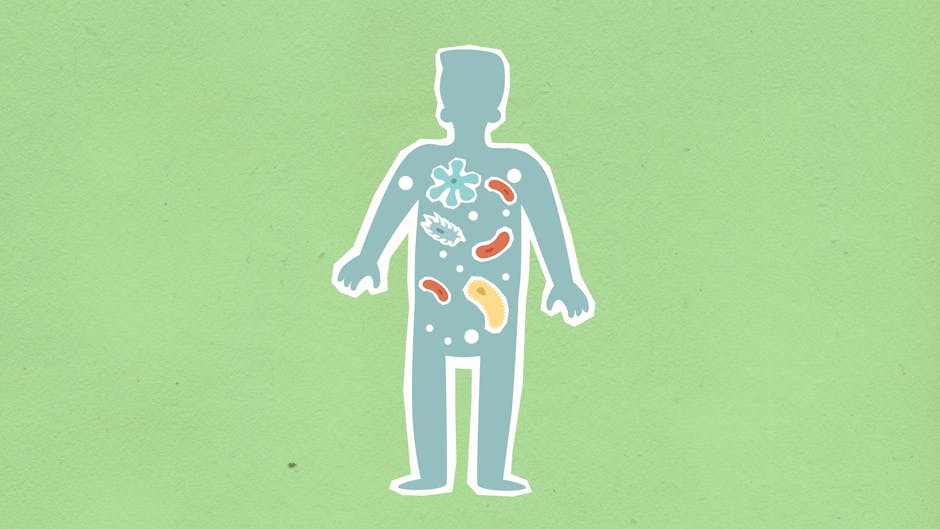
What is a microbiome biomarker?
A biomarker is any measurable indicator of a biological state or condition. In the context of the human microbiome, a biomarker is a specific microbial feature—such as the presence of a species, the abundance of a gene, or a metabolic product—that correlates with health, disease, or response to a therapy.
Unlike traditional clinical biomarkers that rely on blood chemistry or imaging, microbiome biomarkers arise from the complex community of bacteria, archaea, viruses and fungi that live on and inside our bodies. They can be derived from:
- Taxonomic profiles (which microbes are present and in what amounts)
- Functional profiles (what genes or pathways are encoded)
- Metabolite signatures (small molecules produced by the microbes)
- Interaction networks (how microbes engage with each other and the host)
When a consistent pattern links a microbial feature to a condition—say, an increased proportion of Fusobacterium nucleatum in colorectal cancer tissue—that pattern becomes a candidate biomarker.
Why people want microbiome biomarkers
There are three main motivations for hunting microbiome biomarkers:
- Diagnostics: Early detection of disease, especially where conventional tests lack sensitivity.
- Prognostics: Estimating disease course or risk of recurrence.
- Therapeutic guidance: Predicting who will benefit from a drug, diet, or probiotic intervention.
The appeal is understandable. A stool sample is easy to collect, sequencing costs have dropped dramatically, and early studies have shown strong associations between gut composition and conditions ranging from inflammatory bowel disease to depression. However, moving from an intriguing association to a reliable clinical test is a long, uncertain road.
How a microbiome biomarker is discovered
Discovery typically follows a pipeline that mirrors other ‘omics’ fields:
- Sample collection and phenotyping. Researchers gather biological material (usually stool, but sometimes oral swabs or skin scrapings) from groups with known clinical status.
- Sequencing or profiling. DNA is extracted and subjected to 16S rRNA gene sequencing, shallow shotgun metagenomics, or full metagenomic sequencing. Metabolomics or transcriptomics may be added.
- Data preprocessing. Raw reads are filtered, clustered into operational taxonomic units (OTUs) or amplicon sequence variants (ASVs), and normalized to correct for sequencing depth.
- Statistical association. Researchers apply tests (e.g., linear models, random forests, LASSO regression) to identify features that differ significantly between groups.
- Model building. A classifier is trained using a subset of the data, often employing cross‑validation to avoid over‑fitting.
- Validation. The model is tested on an independent cohort. Success at this stage is the first real checkpoint.
Why validation is so difficult
Biological variability
The microbiome is inherently dynamic. Even a single healthy individual can show day‑to‑day fluctuations in species abundance due to diet, sleep, stress, medication, or travel. This intra‑individual variability blurs the signal that a biomarker is supposed to capture.
Technical heterogeneity
Different laboratories use different protocols:
- DNA extraction kits vary in bead‑beating intensity, which changes the efficiency of lysing Gram‑positive bacteria.
- PCR primers target slightly different 16S regions, leading to divergent taxonomic resolution.
- Sequencing platforms (Illumina, Oxford Nanopore, PacBio) have distinct error profiles.
- Bioinformatic pipelines (QIIME2, DADA2, mothur) apply different filtering and clustering rules.
Even when the same sample is processed twice, these sources of variation can shift the apparent composition enough to alter which features emerge as “significant”.
Confounding factors
Because the microbiome mirrors lifestyle, many potential biomarkers are actually proxies for diet, medication, or socioeconomic status. If a study does not rigorously control for these confounders, the resulting model may appear predictive but fails when applied to a population with different habits.
Statistical pitfalls
Microbiome data are high‑dimensional (thousands of taxa) but often low‑sample in size (tens to a few hundred participants). This creates a classic “large‑p, small‑n” problem, where random noise can masquerade as a true association. Common mistakes include:
- Failing to adjust for multiple hypothesis testing, inflating false discovery rates.
- Over‑relying on a single cross‑validation split, which can give optimistic performance estimates.
- Using complex machine‑learning models without transparent feature importance, making it hard to reproduce findings.
Population specificity
A biomarker discovered in a European cohort may not work in an Asian or African cohort because baseline microbiome composition differs across geography, genetics, and diet. Even within a country, urban versus rural populations can have distinct microbial baselines.
Lack of standardised endpoints
Clinical outcomes themselves may be defined differently across studies. For example, “treatment response” in ulcerative colitis can be measured by endoscopic scores, histology, symptom indices, or a combination. When the endpoint changes, the relevance of a previously identified microbial signature may disappear.
Current examples of microbiome biomarkers under investigation
Gut microbiome and response to immune checkpoint inhibitors
Several studies have reported that patients with higher abundance of Akkermansia muciniphila or certain Bifidobacterium species respond better to PD‑1 blockade in melanoma. Follow‑up work showed that fecal microbiota transplantation (FMT) from responders could transfer sensitivity in mouse models. Yet, replication across multiple cancer types and diverse patient populations remains limited.
Oral microbiome and early detection of pancreatic cancer
Researchers identified a panel of nine oral bacterial taxa that distinguished pancreatic cancer patients from controls with an area under the ROC curve (AUC) of about 0.85 in a single‑center cohort. Subsequent external validation yielded lower AUC values, highlighting the challenge of reproducing oral biomarker panels across sites.
Stool metabolite signatures for irritable bowel syndrome (IBS)
Targeted metabolomics has revealed elevated levels of certain bile acids and reduced short‑chain fatty acids in IBS‑D (diarrhea‑predominant) patients. While these metabolites are biologically plausible, their concentrations are affected by recent meals, making it hard to standardise a diagnostic cut‑off.
Best practices for improving validation success
Researchers and developers can adopt a set of practical steps to raise the likelihood that a microbiome biomarker will survive rigorous testing.
Standardise sample handling
- Use a single, validated DNA extraction kit for the entire study.
- Store samples at –80 °C within a defined timeframe after collection.
- Include mock community standards and negative controls to monitor batch effects.
Employ robust statistical designs
- Pre‑register the analysis plan to avoid “p‑hacking”.
- Apply false discovery rate (FDR) correction when testing many taxa.
- Prefer regularised models (e.g., LASSO, Elastic Net) that limit over‑fitting.
- Report performance on an independent hold‑out set, not just cross‑validation.
Validate across diverse cohorts
After an initial discovery in one population, test the same model in at least two external cohorts that differ in geography, diet, or ethnicity. If performance drops dramatically, revisit the feature set and consider adding demographic covariates.
Incorporate functional data
Taxonomic composition alone may not capture the metabolic activity driving disease. Adding metagenomic pathways, metatranscriptomic expression, or metabolomic read‑outs can improve biological relevance and reduce susceptibility to taxonomic noise.
Use transparent reporting
- Provide raw sequencing data and processing scripts in public repositories.
- Publish a clear “minimum information” checklist (e.g., MIxS standards).
- Describe the exact version of reference databases (e.g., SILVA, GTDB) used for taxonomic assignment.
Regulatory considerations for clinical use
When a microbiome biomarker moves from research to a diagnostic device, it must satisfy regulatory bodies such as the U.S. FDA or the European CE‑marking process. Key requirements include:
- Analytical validation: Demonstrate that the assay reliably measures the intended microbial feature across runs, operators, and instrument lots.
- Clinical validation: Show that the biomarker predicts the clinical outcome with predefined sensitivity, specificity, and predictive values in a target population.
- Risk assessment: Identify potential harms, such as misclassification leading to inappropriate treatment.
- Post‑market surveillance: Collect real‑world data to monitor performance over time.
Because microbiome assays involve sequencing, manufacturers must also address data security, bioinformatics reproducibility, and quality‑control metrics that are less familiar to traditional diagnostics.
Future directions that may ease validation
Several emerging trends could reduce the current bottlenecks:
Standard reference materials
Consortia like the Human Microbiome Project are developing curated mock communities that mimic the complexity of real samples. Routine use of these standards allows laboratories to benchmark extraction efficiency and sequencing bias.
Longitudinal cohort designs
Following the same individuals over months or years provides insight into within‑person variability and helps distinguish transient fluctuations from stable disease‑related patterns.
Hybrid multi‑omics signatures
Combining DNA‑based taxonomy with metabolite profiling or host transcriptomics can produce composite scores that are more robust to the noise inherent in any single layer.
Machine‑learning frameworks built for compositional data
Techniques such as balance trees (e.g., PhILR) respect the relative nature of microbiome counts and often yield models that generalise better across datasets.
Regulatory guidance specific to microbiome assays
As more companies submit microbiome‑based tests for clearance, agencies are beginning to publish guidance documents. Clearer pathways will help developers align study design with regulatory expectations from the outset.
Practical takeaways for researchers and clinicians
When you encounter a claim that “a gut bacteria predicts disease X”, keep these points in mind:
- Check whether the finding has been reproduced in at least one independent cohort.
- Look for details on sample handling, sequencing platform, and bioinformatic pipeline.
- Assess whether the model accounts for confounders such as diet, antibiotics, or age.
- Consider the intended use: a screening tool for the general population requires higher sensitivity than a companion diagnostic for an already‑identified high‑risk group.
- Ask whether the biomarker adds information beyond existing clinical parameters.
By applying a critical, evidence‑based lens, you can separate promising leads from over‑hyped claims and help steer the field toward reliable, patient‑benefiting applications.
